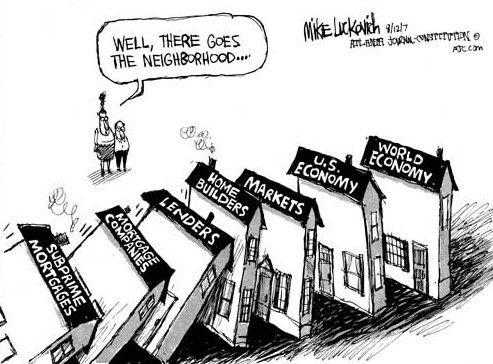
Given the very high debt to GDP burden of Greece and its very weak economy, the recession-crippled country is on the brink of collapse. The sovereign country cannot honour its maturing debt obligations and face huge liquidity challenges. The situation reminisces of the African and Latin American debt crisis of the 1980s and 1990s followed by the Asian crisis of 1996. Russia’s default in 1998 and Argentina in 2001. Default on the rubble correlated with other market forces to collapse Lehman Brothers setting the stage for a global financial shock. The Greek crisis is therefore not the first of its kind. There exist a long-line of debt crisis that have plagued all continents since banking was liberalized in the 1970s.
How different is the Greek crisis and how did it get to this point?
Greece attracted international spotlight in October 2009 after announcing the understatement of its deficit figures for years. It became known that the Greeks financially engineered their way into the Eurozone. With such dishonesty, confidence crisis ensued indicated by widening of bond yield spreads and insurance premiums. These revelations led to their shut out from borrowing from the financial markets. As early as the first quarter of 2010, the country was veering towards bankruptcy. With global financial markets still reeling from Wall Street’s implosion two years earlier, Greece’s precarious situation seemed certain to set off another financial crisis. To avert this calamity and remain in the Eurozone someone had to write a huge cheque to cater for a good chunk of the indebtedness. This option is practically a bailout. If that doesn’t happen, the only viable option for Greece was to go off the Euro, print their own money and inflate away their liabilities. But that inflation, and this has happened in the past with countries in similar situation, could very easily turn to hyperinflation.
As anticipated, the European Commission, European Central Bank and the International Monetary Fund (also referred to as troika) issued the first of two bailouts for Greece. The bailout came with some austerity measures meant to streamline government spending and revenue mobilization as well as an overhaul of the Greek economy. However, much was not achieved necessitating the need for a second bailout package. More than 240 billion Euros ($264 billion) of bailout money has been granted Athens to date. The money has gone into paying Greece’s external debts and not into revamping their economy. The government still has staggering debts to pay without much economic output to leverage. Most economists have fingered austerity measures as the major cause of the country’s continuing problem. The Syriza party rode on the back of its anti-austerity promise to come to power this year vowing to renegotiate a new and better bailout deal for Greece.
Why the Troika Bailed out Greece?
Greece is the first and perhaps the worst in this situation in the Eurozone but definitely not a lone ranger. There were other high carrying debt Eurozone countries like Portugal, Italy, Spain and Ireland. If Greece had fallen apart with the Eurozone unable to bail it out, it would have sent an implicit signal to the financial markets that Europe was unable to bail out its countries. Spain, Portugal, Italy and Ireland had high unemployment rates as well as Debt to GDP ratios. Investors were going to ask for higher returns in lending to these nations and further exacerbate their already unsustainable debt stock. This had the potential of slowing the economies of these countries making it much difficult to service their obligations and send them in same direction as Greece. The fear was that Greece had by itself become a point of instability in Europe and if that was not dealt with it could set a chain reaction in motion (contagion). Financial contagion is a potent weapon to destroy the Euro. If investors freak out and decide not lend to these countries, they might want to leave the Euro thereby destabilizing it. The bailout moneys supposed to buy the Greeks time to sort out their finances and quell market fears about the Euro’s break up, did not relieve Greece of its problems. However, it helped dispel the fears of a breakup of the currency bloc.
Talks of Grexit
Greece has never been out of media coverage since its grand entry in 2009. However, talks of a third bailout and a bitter-stand off with its creditors especially the German Chancellor, Angela Merkel have received extensive reportage with some expecting Greece’s exit from the Euro (Grexit). Greece’s financial system has been shut down for about three weeks now with cash withdrawals limited to €60 ($65) a day and cross border electronic transfers disallowed. This move aimed at slowing bank runs has returned Greece to a cash economy. This spectacular slow motion bank run has been necessitated as Greeks fear for the safety of their deposits. This is the painful process to be endured by the Greeks if they are to leave the Euro. The new currency (Greek drachma) would probably be highly devalued relative to the Euro and with this, savings would be wiped out for Greek savers. With a standoff over a bailout deal between the Syriza led government of Alexis Tsipras and their Euro bloc creditors stalling for over six months, everyone now recognizes that Grexit is thinkable. An estimated €45 billion (worth 25% of GDP) was withdrawn before the closure of the banks. One rational explanation for this is that Athenians are readying themselves for Grexit without necessarily having to loose value on their hard earned Euros.
Syriza hardliners pushed for a better third bailout deal for the Greeks in the just ended marathon of negotiations. However, the bitter acrimonious negotiations worsened and culminated in a worse deal than hoped for by the radical-left party sympathizers. The agreement reached in Brussels on July 13 for the bailout involved sweeping austerity measures that had to be passed by the country’s legislators. How long will Greece put up with austerity before regaining financial autonomy? Even if Greece is pushed over the Euro cliff, it could still use the Euro as its currency, just as many countries use the US dollar without the prior approval of the United States of America government. Perhaps what other Euro members would push for is cessation of European Central bank lending to Greek banks, thereby ensuring that all Euros in circulation in Greece are earned by trade or already existed in Greece before its exit.
Is Financial Contagion over?
Notably, the fear of Grexit has gotten less scary in the rest of Europe during the protracted negotiations. The fear of the risk of Greece’s predicament infecting the likes of Portugal, Spain and Italy has fallen. These countries have now overhauled their economies and are less vulnerable to market contagion than they were some years back during the height of the debt crisis. Contrary to the views of some experts that the Greek problem could spill to the rest of the world and cause financial shocks bigger than that which crippled and collapsed Lehman Brother should Greece default on their debts and exit the Eurozone, Grexit should not be catastrophic now since Europe has in place measures to limit contagion from spreading to other member states. More so since 2010, most international banks and foreign investors have offloaded their Greek bonds and other holdings and are therefore directly insulated from what happens in Greece.
Europe’s fear of Greece setting a chain reaction in motion and destroying the Euro project with it may have been quelled, however, as Donald Tusk, the EU leader that brokered Monday’s bailout deal has warned, political contagion is seeping through the Greek crisis.
 The Post
Leave a comment